
How Skills Assessments Work (and Why They Matter)

If you are planning to migrate to Australia through a skilled visa pathway , one of the first steps you may need to complete is a skills assessment. Many applicants are surprised to learn that having qualifications and work experience is not enough on its own
In many cases, you must prove that your skills meet Australian standards before you can apply for a visa. This article explains the migration skills assessment process, why it matters, who needs one, and how to improve your chances of success.
What Is a Skills Assessment?
A skills assessment is a formal evaluation of your qualifications, employment history, and skills by an authorised assessing authority in Australia. The purpose is to determine whether your skills match the requirements of a particular occupation listed by the Australian Government.
A positive skills assessment confirms that your qualifications and work experience are suitable for your nominated occupation. Each occupation has its own assessing authority and assessment criteria.
Why Do Skills Assessments Matter?
A skills assessment is often a mandatory requirement for skilled migration visas. Without a suitable skills assessment, you may not be able to:
- Lodge an Expression of Interest (EOI)
- Claim migration points for your occupation
- Apply for certain skilled visas
- Receive a state nomination in some circumstances
A positive assessment provides evidence to the Department of Home Affairs that you genuinely possess the skills required for your nominated occupation. In simple terms, it helps verify that you can perform the job you are claiming to be qualified for.
The table below highlights the most common occupation groups granted visas in 2025. With thousands of applications competing for limited places, it is vital to present the strongest possible evidence to maximise the chances of success.
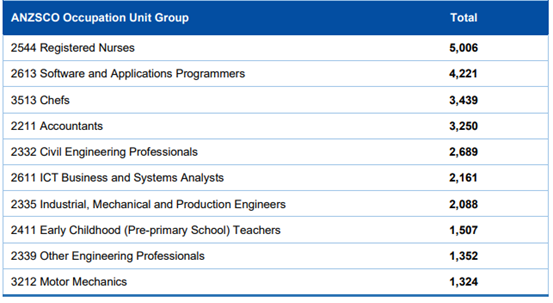
Source 2024-25 Migration Program Report - Home Affairs website.
Once you understand why a skills assessment is important, the next step is determining whether your visa pathway requires one.
Which Visas Require a Skills Assessment?
Skills assessments are commonly required for visas such as:
- Skilled Independent Visa (Subclass 189)
- Skilled Nominated Visa (Subclass 190)
- Skilled Work Regional Visa (Subclass 491)
- Employer Nomination Scheme Visa (Subclass 186) in certain streams
- Skilled Employer Sponsored Regional Visa (Subclass 494)
- Skills in Demand Visa (Subclass 482) in certain occupations
- Temporary Graduate Visa (Subclass 485) in certain streams
Requirements can vary depending on the visa type and occupation.
Before starting an application, it is important to confirm whether a skills assessment is required for your specific visa pathway.
Step By Step Process
Step 1: Check Whether Your Occupation Is Eligible
Before applying for a skills assessment, you need to identify your occupation. Australia maintains various skilled occupation lists that determine which occupations are eligible for different visa programs. Your occupation should accurately reflect your qualifications, employment history, and day-to-day duties. Choosing the wrong occupation can lead to delays, additional costs, or even a negative assessment outcome.
You can learn more about skilled occupation lists in our article on understanding the skilled occupation list via https://www.aitken.com.au/news/understanding-the-skilled-occupation-list
Step 2: Identify the Correct Assessing Authority
Once you have selected your occupation, the next step is finding the correct assessing authority in Australia. Different occupations are assessed by different organisations.
Each assessing authority has its own eligibility requirements, document requirements, processing times, assessment fees, assessment methods. It is important to carefully review the specific requirements that apply to your occupation.
Below is an example of the assessing authorities for the top 3 skilled visas in 2025:
Occupation group |
Assessing authority |
Registered Nurses |
ANMAC, Australian Nursing & |
Software and Applications Programmers |
ACS, Australian Computer Society |
Chefs |
TRA, Trades Recognition Australia |
Step 3: Gather Supporting Documents
The migration skills assessment process usually requires substantial supporting evidence. Common documents include:
- Identity Documents
- Qualification Documents
- Employment Evidence
Incomplete or inconsistent evidence is one of the most common reasons for delays and negative outcomes.
Step 4: Lodge the Application
Once your documents have been prepared, you can submit your application to the relevant assessing authority. Most authorities now accept applications online. At this stage, you will generally need to:
- Complete an online application form.
- Upload supporting documents.
- Pay the assessment fee.
- Provide additional information if requested.
Some occupations may require practical assessments, technical interviews, or competency demonstrations.
Step 5: Wait for the Assessment Outcome
Processing times vary significantly between assessing authorities. Some applications may be finalised within a few weeks, while others can take several months. During the assessment process, the authority may request further documents, seek clarification regarding employment, verify qualifications, and contact employers for confirmation.
Applicants should respond promptly to any requests to avoid unnecessary delays.
What Happens if You Receive a Positive Skills Assessment?
A positive skills assessment means the assessing authority has determined that your qualifications and experience meet the requirements for your nominated occupation.
This outcome can then be used to support:
- Skilled visa applications
- Expressions of Interest (EOIs)
- State nomination applications
- Employer-sponsored visa applications
Many positive assessments have validity periods, often ranging from two to three years depending on the authority. Always check the validity period before lodging your visa application.
What Happens if You Receive a Negative Assessment?
A negative assessment does not necessarily mean the end of your migration plans. Common reasons for a negative outcome include:
- Insufficient employment evidence
- Qualifications not meeting Australian standards
- Incorrect occupation selection
- Employment duties not matching the occupation requirements
- Missing documents
Depending on the circumstances, you may be able to:
- Provide additional evidence
- Request a review
- Apply under a different occupation
- Gain further work experience before reapplying
Seeking professional advice can often help identify alternative pathways.
Top Tips for a Successful Skills Assessment
1. Choose the Correct Occupation
Your occupation should match your actual duties, not just your job title. Assessing authorities focus heavily on the work you perform rather than the title on your employment contract.
2. Prepare Strong Employment References
Employment references are among the most important documents in many assessments. Ensure they clearly describe your duties and responsibilities.
3. Keep Supporting Evidence Consistent
Information across your employment references, resumes, tax records and visa applications should be consistent. Discrepancies can raise concerns and lead to requests for further information.
4. Start Early
Obtaining employment documents and assessment outcomes can take longer than expected. Starting early can help avoid unnecessary delays in your migration plans.
5. Seek Professional Advice if Needed
The skills assessment process can be complex, particularly where applicants have overseas qualifications, self-employment experience, or unusual employment histories. Professional guidance may help reduce the risk of costly mistakes.
Common Misconceptions About Skills Assessments
Many people believe that a university degree automatically guarantees a positive assessment. Unfortunately, this is not always the case. Assessing authorities generally look at qualifications, employment history, skill level, relevance of experience and occupation-specific requirements.
Similarly, having years of experience does not necessarily mean your occupation will be assessed positively if your duties do not align with the nominated occupation.
Are There Any Skills Assessment Exemptions?
While most skilled migration visas require a positive skills assessment, there are some exceptions. For example, applicants applying for a Subclass 186 Employer Nomination Scheme visa under the Temporary Residence Transition (TRT) stream generally do not need a skills assessment. This is because their skills and experience have already been demonstrated through their employment with their sponsoring employer. There are also limited exemptions under the Subclass 186 Direct Entry stream for certain applicants, including some academics, researchers, scientists and eligible New Zealand citizens.
However, exemptions are relatively uncommon. Most applicants applying for skilled visas such as the Subclass 189, 190 and 491 visas will still require a positive skills assessment from the relevant assessing authority.
Before lodging a visa application, it is important to confirm whether a skills assessment is required for your occupation and visa pathway, as the requirements can vary significantly.
Special Rules for Certain Occupations
Some occupations have special assessment arrangements. For example, doctors generally rely on medical registration pathways through the relevant Australian medical authorities rather than a standard skills assessment.
As a result, applicants in regulated professions such as medical, law, nursing and teaching should carefully check both the migration and professional registration requirements before applying.
Final Takeaway
A skills assessment is one of the most important steps in many Australian skilled migration pathways. It confirms that your qualifications and experience meet the requirements of your nominated occupation and can significantly impact your visa eligibility. Understanding the skills assessment Australia requirements early can help you avoid delays, strengthen your application, and improve your chances of a successful migration outcome.
If you are unsure which occupation to nominate, which assessing authority applies to you, or how to prepare your evidence, our migration team can help. We can assess your circumstances, identify the most suitable pathway, and guide you through the entire migration skills assessment process from start to finish.
Please note: The information on this page is provided for general information purposes only and does not constitute legal advice. It is not intended to be comprehensive or to apply to any specific circumstances. You should seek independent legal advice before acting on any information contained on this page.
Design by: Cabria Design. Site by: Flux Creative