
What is the Difference Between a Migration Agent and a Migration Lawyer?


Lauraine Nguyen
Both migration agents and migration lawyers can assist with visa applications and migration matters. However, a migration lawyer is a qualified legal practitioner who can provide legal advice on complex issues, including visa refusals, cancellations and review proceedings.
For applicants facing challenging circumstances or seeking broader legal advice, a migration lawyer can provide additional guidance and representation throughout the process. Some of these matters include:
Can I appeal a visa refusal in Australia?
Yes. Depending on your situation you may be able to apply a refusal. Our Migration Lawyers help support skilled workers, employers and sponsors affected by visa refusal decisions:
- Skills in Demand (SID) visa refusals
- Employer Nomination Scheme matters
- Skilled migration visa refusals
- Sponsorship compliance issues
- Partner & Family Visa refusals
What is the Administrative Review Tribunal?
The Administrative Review Tribunal (ART) is an independent body that reviews certain government decisions, including some visa refusals and cancellations, to determine whether the original decision should be affirmed, varied or set aside. We also help clients challenge eligible visa refusals through independent merits review before the Administrative Review Tribunal:
- Review rights assessments
- ART application preparation
- Tribunal submissions and evidence
- Representation throughout review proceedings
Judicial Review Applications
Our team can help in providing advice and representation where a visa refusal or tribunal decision may involve a legal error requiring court intervention:
- Assessment of legal review rights
- Federal Court applications
- Jurisdictional error advice
- Court submissions and representation
Ministerial Intervention Requests
Our team can provide strategic assistance for clients seeking ministerial intervention based on compelling or exceptional circumstances:
- Ministerial intervention applications
- Preparation of detailed submissions
- Supporting evidence and documentation
- Strategic advice on eligibility and prospects
Click here to find out more about dealing with Visa Refusals & Appeals
Getting the Right Advice
It is vital to get the right advice to get the best chance of a successful outcome, for individual applications, couples and businesses that are seeking to sponsor new staff members.
Aitken Partners works with clients to assess their circumstances, identify suitable migration pathways and manage the legal and procedural requirements involved. Our Migration Law team provides practical guidance throughout the process, helping clients make informed decisions and respond to changes with greater confidence.
Choosing the Right Visa
Prospective migrants often ask which skilled visa they should apply for. There is no single answer that applies for everyone.
The most suitable pathway may depend on:
- Nominated occupation
- Qualifications and skills assessment
- Employment history
- English language results and points score
- Current invitation and occupation priorities
- State or territory nomination opportunities
- Willingness to live in a regional area
- Family sponsorship options
- Their long-term professional and migration goals
Applicants with similar occupations may still have very different migration options, depending on their qualifications, experience, points score and personal circumstances.
Skilled migration should therefore be approached as a broader strategy rather than a choice between three visa subclasses. This may involve comparing several pathways, reviewing nomination opportunities and identifying legitimate ways to strengthen an applicant’s eligibility or competitiveness.
As migration requirements and government priorities can change, applicants should rely on current information and ensure that every claim made in an Expression of Interest or visa application can be properly supported.
Advice tailored to the applicant’s circumstances can help clarify viable pathways, identify potential risks and support a more informed migration strategy.
Skilled Migration Guide
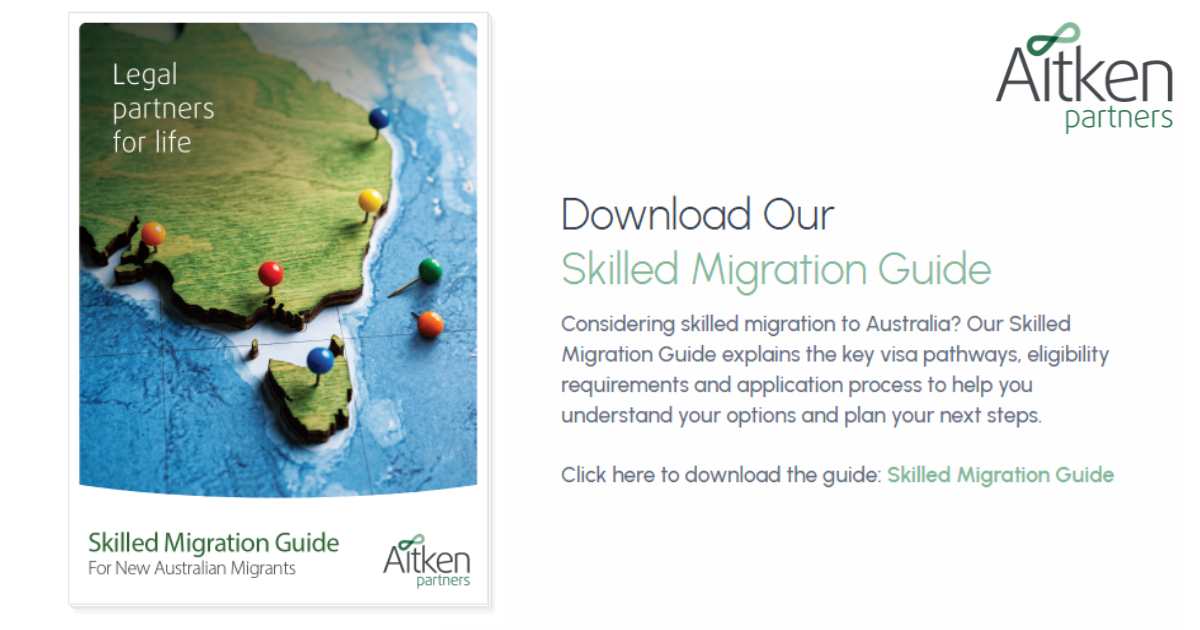
To help individuals, families and employers better understand the process, Aitken Partners has developed a comprehensive Skilled Migration Guide. This free resource provides a practical introduction to Australia's skilled migration framework and explains the key pathways available to qualified applicants.
Inside the guide, you'll learn about:
- Skilled migration pathways and the application process
- Common skilled visa categories and their requirements
- Skills assessments and occupation lists
- Points testing and invitation rounds
- State and territory nomination programs
- English language requirements
- Visa refusals, appeals and review options
- The role of migration lawyers in complex migration matters
Guiding You Through Australia’s Migration Pathways
Navigating Australia’s migration system can be complex and overwhelming. At Aitken Partners, our Melbourne-based Migration Law team provides clear, practical, and strategic legal support to individuals, families, and businesses.
With decades of combined experience and deep knowledge of Australia’s evolving migration landscape, we offer personalised guidance to help you move forward with confidence. Whether you’re applying for a skilled visa, sponsoring an employee, reuniting with loved ones, or seeking permanent residency.
Our team of migration lawyers works collaboratively with our broader legal network, including commercial, tax, employment, and property experts. We provide seamless support tailored to your goals.
We look forward to helping you through this journey.
Call us on: +61 3 8600 6000 to BOOK A CONSULT.
Please note: The information on this page is provided for general information purposes only and does not constitute legal advice. It is not intended to be comprehensive or to apply to any specific circumstances. You should seek independent legal advice before acting on any information contained on this page.
Design by: Cabria Design. Site by: Flux Creative